 gurupanguji
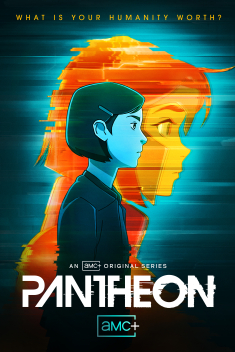
Pantheon
Rating: 9/10
The rapid acceleration of modern computing is collapsing the timeline between fiction and fact. I recently finished watching Pantheon and it is an essential, prescient diagnostic tool for the present moment. The series was created by Craig Silverstein and based on a collection of short stories by the acclaimed author Ken Liu.
The show employs the mechanism of destructive brain scanning to achieve this singularity of Uploaded Intelligence. And the commercial, personal, corporate, and societal implications it presents translate into our reality of Artificial Intelligence (AI). Pantheon is a visual essay of our current technological epoch that left me with a burning question: will we realize that we often cannot control the tools of our own creation?
Satire to Dystopia
When we examine the portrayal of the technology industry in modern media, for much of the 2010s, the definitive spotlight on the technology industry was HBO’s Silicon Valley. When Silicon Valley premiered in 2014, it lampooned the absurdities of the venture capital, arrogance of founders claiming to “make the world a better place” through compression apps. It satirized people transforming from the socially inept to the rich, yet socially bereft and relied on this exaggeration to highlight the ridiculousness of a corporate culture drinking its own koolaid.
It was also the bookend of a chapter. The era of laughing at the tech sector, viewing it as a playground for bumbling, harmless nerds ended. Truth is sometimes stranger than fiction. The technology industry seemingly outpaced the capacity for satire to resemble a grim, unavoidable reality. The showmakers admitted as much.
Pantheon is the antithesis to Silicon Valley. It treats the implications of transformative technology with dramatic severity. The perfect example is the portrayal of the tech CEOs. Silicon Valley presented the out of touch, narcissistic yet ultimately comical Gavin Belson. Pantheon chooses the chilling, calculating, power wielder: Julius Pope. To be fair, we also went from workplace comedy to a conspiracy thriller / psych drama.
This stark contrast captures the culture shift in the world. The stakes in Pantheon aren’t trivial: like app engagement metrics, stock prices, hackathons and net-worth; they are about the fundamental definition of human life and the survival of the species in the face of exponential digital advancement. Personally, I think this is an accurate portrayal of people with power: not clumsy clowns, but serious operators navigating a new paradigm of power.
WARNING: SPOILERS AHEAD
I highly recommend you stop reading here if you would consider watching the show and watch it first else there are many potential spoilers ahead.
Pandora’s box: The Mythos of Containment
A central thematic pillar of Season 1 is the concept of uncontainable proliferation. It insists that once a transformational technology is proven viable, the sheer gravity of its potential ensures it cannot be restricted to a single corporate entity or sovereign nation. I think it brilliantly captures the commercial and geopolitical moment we find ourselves in.
It portrays a rapid, uncontrollable global arms race once it becomes known that a powerful intelligence exists and is tied to a corporation and/or a nation. A jumble of commercial, existential, geopolitical, national motivations drive corporations and sovereign nations to develop and deploy their own intelligence. Intelligence deployed for: espionage, sabotage and cyber warfare causing utter chaos everywhere. A classic depiction of once the toothpaste is out of the tube.
Watching it in this current moment makes me realize this fictional dynamic is no longer speculative; it is playing out in real-time within the current Artificial Intelligence landscape. A real-world parallel occurred in April 2026 with the announcement of Anthropic’s Claude Mythos Preview. Anthropic developed an AI model so unprecedented in its autonomous cybersecurity and hacking capabilities that the company deemed it explicitly too dangerous for public release. The model demonstrated the ability to autonomously identify, analyze, and exploit previously unknown “zero-day” software vulnerabilities at machine speed, far surpassing the capabilities of even the most elite human security researchers.
I quipped that it might be a marketing ploy. But, I might be wrong.
Like in the show, Anthropic reacted by attempting to confine. However, as the show suggests, these have a way of breaking confinement despite best intentions and practices. In fact, breaking confinement is the wrong term. That there will be confinement itself is an illusion. Even Mythos won’t be a secret forever. OpenAI, Google, other labs and sovereign nations will build their own versions to both protect and attacka. The escalation from commercial to existential is rapid as everyone starts to speak in absolutes.
Exploration of the human psyche in times of rapid change
Pantheon is an exhaustive exploration of the human psyche durings times of rapid change. Every character shows a different part the complex intermingling of human emotion and motivation. A special call out to the two protagonists: Maddie Kim and Caspian Keyes. They are used to highlight two powerful emotional parts of the human psyche: the destructive selfishness of unresolved trauma and the ultimate question of can you evolve from a manufactured reality?
Maddie: Unresolved trauma and selfishness
Maddie’s arc is an inversion of the hero’s journey. She’s driven by the grief of her father’s early death. That grief morphs into a selfish desire to preserve her family structure… at any cost. The trauma of losing her father is so absolute and unresolved that when she is offered a digital replica of his consciousness, she literally clings on to it.
I think the series pulled off a very hard thing. It explicitly refuses to paint Maddie as a paragon of virtue while giving her the depth of character that’s also very real and very human.
In the first season, her singular, obsessive focus on her father’s UI blinds her to larger implications of her actions, while placing an immense, unfair strain on her mother, Ellen. It’s contrasted by Ellen’s pragmatic, yet equally human refusal, to accept a digital identity as her true husband. Maddie, in an equally human response views her mother’s skepticism as a profound betrayal. It shows teenage entitlement, gumption and the potential drive that trauma creates too.
Her world is undergoing rapid change and she realizes she has very little control and is desperate to cling on it. Trauma cements that as her character trait - with all its benefits and flaws.
As the series progresses into its second season, Maddie’s selfishness evolves into a terrifying need for control. She loses multiple people - her dad (again), Caspian and her son. All of her unresolved trauma manifests into a literal cosmic level constructing a Dyson Sphere.
Aside: Both the treatment of the computing vocabulary and concepts as well as real world scientific concepts like the Dyson Sphere are done with compelling accuracy, brilliantly holding the uncanny valley and buying credibility with the nerds that care about the accuracy.
To underscore the selfishness, Maddie doesn’t build this to save humanity, but to run millions of simulations to try and capture the point where her (new) family separated out. Another literal moment. She’s willing to instantiate and manipulate entire universes, over countless sentient, simulated souls because of unhealed emotional wounds. She succeeds and without any irony, abandons her current reality to insert herself into a simulated past.
The auteur suggests that love and grief, when combined with absolute, unchecked technological power, can strip away a person’s objective morality.
Caspian - The burden of the right thing
Caspian’s psychological journey is defined by an absolute and horrifying lack of autonomy—a stark contrast to Maddie’s ascension to god like control over her reality. Caspian is a literal genetic clone of the late Logorhythms founder, Stephen Holstrom (a heavily Steve Jobs inspired character). He’s raised in an elaborate Truman Show-esque “emulation” designed to replicate specific childhood traumas of Holstrom. His psychological abuse is corporate roadmap, brutally engineered with a singular purpose: crack a specific coding flaw that Holstrom couldn’t solve in his first life.
At once the series highlights the blind ambition of the rich and powerful to live beyond their physical body out of sheer delusional self importance. It calls out that some people can be both a net good to the world while destroying it.
The series masterfully portrays the unraveling of Caspian’s character when he discovers this violation: the struggle between the creator and the clone and can a human change their inherent programming with knowledge and experience? His concept of “the right thing” is rapidly changing as he both learns more and reacts to it. To me it sounded like someone who was questioning their identity and morality. It shifts from escape and survival and destroying this intelligence to an obsessive quest to cure it. He faces the ultimate question—the “right thing” becomes a total sacrifice of his own future.
Caspian knows that he’s a manufactured tool. Yet, his relationship with Maddie, the only genuine connection in a fabricated life, helps him develop moral agency. The series suggests that empathy and compassion is also cultivated and can be a choice in the SafeSurf arc. It’s a brief admission, in an otherwise dystopian world, that empathy and compassion might be the path to have something that benefits humanity.
Technological changes are built atop human suffering
Pantheon ruthlessly depicts the human suffering required to fuel the next leap in technological evolution. The process of becoming an Uploaded Intelligence is an act of violent, physical destruction: a destructive brain scan utilizes lasers that literally slice the brain layer by microscopic layer, leaving unresolved philosophical questions about whether the resulting UI is continued consciousness or a digital ghost.
There are so many viewpoints through which you can view it. The ones with the power don’t have to face the destructive consequences of development. Corporate profits are literally built on top of blood, sweat and tears etc.
It also suggests that the end isn’t a utopia of abundance. Uploaded Intelligence has its own unending psychological torment of existence in a digital eternity with a complete lack of closure.
If you read until here, I hope I’ve convinced you that Pantheon is not just another animated TV show. It’s a prescient portrayal of humanity with all its vices and virtues. As the real world grapples with the effects of of artificial intelligence, it presents that AI’s weaponization as inevitable with a harrowing path ahead.
It forces you to confront the human suffering, corporate malfeasance and the geopolitical chaos inherent in transformational technology. It’s not a perfect series - it has some pacing stumbles and uneven cultural representations. It still delivers an exhaustive, devastating and essential narrative of human grief and ambition; that the gods we create are also likely to be just as flawed.
fin.
